01 / Executive brief
Executive summary
Yu Zhou and Li Chen spent roughly a decade each inside research programs at Nationwide Children's Hospital. Their trusted positions exposed them to methods for isolating exosomes—tiny biological packages with potential diagnostic and therapeutic value—including a protected technique that worked from a single drop of blood. S1S2S3S4
While still connected to the hospital, the married researchers created and operated a company in China without the institution's knowledge, used at least five stolen trade secrets in its business, advertised related products and services, and pursued government-linked funding and benefits. Both pleaded guilty, received prison terms and joint restitution exceeding $2.6 million, and later had their U.S. naturalizations revoked in federal civil proceedings. S1S2S3S4S5
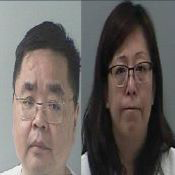
Yu Zhou, left, and Li Chen, the married researchers who pleaded guilty to conspiring to steal exosome-related trade secrets from Nationwide Children's Hospital. DCSA/CDSE publishes these identification photographs with its official case study.
Defense Counterintelligence and Security Agency / CDSE · Editorial use; published by DCSA/CDSE
Exosomes are nanoscale extracellular vesicles with diagnostic and therapeutic potential. The stolen methods concerned isolating them, including from a single drop of blood. Contextual scientific illustration.
Law ZJ, Khoo XH, Lim PT, Goh BH, Ming LC, Lee WL, and Goh HP · CC BY 4.0 ↗02 / The vignette
What happened
Long tenure created deep laboratory access
Zhou worked at the institute from 2007 to 2017 and Chen from 2008 to 2018. Years inside the same research environment gave them more than access to documents: they learned the experimental sequence, materials, troubleshooting, and practical know-how behind exosome isolation. Their pleas covered at least five trade secrets, including the one-drop-of-blood method. S1S2
A hidden company commercialized the work
The pair formed and operated a company in China without Nationwide Children's knowledge. Court records describe the company advertising products and services derived from hospital methods and entering a substantial commercialization agreement. The record also documents government-linked funding or benefits, though it does not prove that a PRC agency ordered or managed the theft. S1S2S3S5
Criminal pleas were followed by civil consequences
Chen pleaded guilty in July 2020 and Zhou that December. They received 30- and 33-month prison terms, forfeiture orders, and joint restitution of $2,616,087. In March 2026, a federal judge entered civil orders revoking both naturalizations; because those orders were recent at review, later appellate activity remains an update point. S2S3S4S5
03 / Anatomy
How access became transfer
This chain reconstructs the sequence supported by the cited record. It does not imply that every legitimate relationship follows the same path.
- 01
- 02
- 03
- 04
- 05
- 06
04 / Evidence boundary
What is established—and what is not
Established in the record
- Both researchers admitted the charged conspiracy through guilty pleas; the central misconduct is adjudicated rather than merely alleged. S1S2
- The stolen assets included at least five trade secrets concerning exosome isolation, including a method using one drop of blood. S1S2
- They operated a company in China without the hospital’s knowledge and pursued commercial value from the hospital-derived methods. S1S2S3
- The record documents Chinese government-linked funding or benefits, but does not establish state direction of the theft. S1S5
Uncertain, limited, or unresolved
- Public records document funding and benefits associated with Chinese government programs, but do not prove that a PRC agency ordered or managed the underlying theft. S1S5
- Because the 2026 denaturalization orders were recent when this file was reviewed, later civil appellate activity may require an update. S5
05 / Sequence
Timeline
-
Research access
Zhou worked at the institute from 2007 to 2017 and Chen from 2008 to 2018. S1
-
Chen pleads guilty
Chen admitted conspiring to steal trade secrets and commit wire fraud, including conduct involving at least five hospital trade secrets. S2
-
Zhou pleads guilty
Zhou pleaded guilty to the same conspiracy offenses and admitted his role in the scheme. S1
-
Chen sentenced
The court sentenced Chen to 30 months in prison and ordered restitution and forfeiture. S3
-
Zhou sentenced
The court sentenced Zhou to 33 months in prison, imposed a fine, and ordered joint restitution and forfeiture. S4
-
Naturalizations revoked
A federal judge entered civil orders revoking both defendants’ naturalizations after finding they had been illegally procured. S5
06 / People and institutions
Who appears in the public record
Yu Zhou
Former Nationwide Children’s Hospital researcher and co-founder of a company in China
Outcome: Pleaded guilty; sentenced to 33 months, a fine, restitution, and forfeiture; naturalization revoked in 2026
Li Chen
Former Nationwide Children’s Hospital researcher and co-founder of a company in China
Outcome: Pleaded guilty; sentenced to 30 months, restitution, and forfeiture; naturalization revoked in 2026
Originator / affected institution
Nationwide Children’s Hospital Research Institute
Employer and owner of the exosome-related trade secrets developed in its laboratories
07 / Consequences
Documented and attributed harm
The sentencing court imposed joint restitution of $2,616,087, reflecting the loss amount used in the criminal judgments. S3S4
Chen admitted that, after the one-drop isolation method was taken, the hospital could no longer perform that isolation method in its laboratory. S2
The couple received nearly $1.5 million in transactions tied to the scheme, according to the 2026 Justice Department summary of the court record. S5
08 / Hindsight analysis
Where leadership could have seen risk
These are our analytic judgments based on the public record, not court findings. They are framed to improve controls without treating nationality as a risk factor.
Outside interests were invisible
The researchers operated a related company abroad without the hospital’s knowledge. Conflict disclosures were not connected tightly enough to technical access and commercialization monitoring.
Know-how could leave without a file
Laboratory methods include tacit steps, sample handling, and troubleshooting knowledge. Controls focused only on documents would miss much of what made the method reproducible.
Long tenure reduced scrutiny
A decade of trusted work created sustained access. Mature insider-risk programs reevaluate changing outside ties and access patterns without treating longevity as a substitute for controls.
09 / Apply the lesson
Actions leaders can take
- universities
Join disclosures to access review
Reconcile outside appointments, equity, companies, patents, talent-program participation, and foreign funding with laboratory access and sponsored-research obligations at least annually.
- both
Map tacit knowledge
Identify the protocols, samples, settings, supplier knowledge, and troubleshooting steps that make high-value research reproducible; protect them as a system, not only as files.
- universities
Set commercialization tripwires
Monitor lawful public signals—new companies, patents, product claims, websites, and licensing activity—for overlap with protected institutional work, with counsel-defined review thresholds.
- both
Preserve a safe reporting channel
Give colleagues a confidential route to report undeclared companies, unusual sample movements, or pressure to bypass material-transfer and licensing processes.
10 / Source record
Sources
Links point to the public record reviewed for this file. Government releases can summarize court proceedings but remain government-authored sources; the source note identifies those limits.
- S1 government release
Man Who Worked at Local Research Institute for 10 Years Pleads Guilty to Conspiring to Steal Trade Secrets ↗
U.S. Department of Justice · Published Dec 11, 2020 · Retrieved Aug 23, 2026
Zhou plea summary with employment, company, technology, and government-benefit facts.
- S2 court record
Plea Agreement: United States v. Li Chen ↗
U.S. District Court for the Southern District of Ohio via U.S. Department of Justice · Published Jul 30, 2020 · Retrieved Aug 23, 2026
Signed plea agreement and statement of facts.
- S3 government release
Hospital Researcher Sentenced to Prison for Conspiring to Steal Trade Secrets and Sell Them in China ↗
U.S. Department of Justice · Published Feb 1, 2021 · Retrieved Aug 23, 2026
Chen sentencing summary, including restitution and forfeiture.
- S4 government release
Hospital Researcher Sentenced to Prison for Conspiring to Steal Trade Secrets and Sell Them in China ↗
U.S. Department of Justice · Published Apr 20, 2021 · Retrieved Aug 23, 2026
Zhou sentencing summary, including the fine, joint restitution, and forfeiture.
- S5 government release
Federal Judge Revokes Naturalization of Married Couple Who Conspired to Steal Medical Trade Secrets and Share Them with China ↗
U.S. Department of Justice · Published Mar 31, 2026 · Retrieved Aug 23, 2026
Summary of March 30, 2026 civil orders and the underlying criminal record.